
Learning to See

When people ask how they can improve their landscape photography, they often expect me to talk about camera settings, filters or lenses.
Those things matter. But not nearly as much as most people think.
The biggest change in my own photography didn't come when I bought a new camera or learned a new editing technique. It came much more slowly, as I began to realise that photography starts long before you lift the camera to your eye.
It starts with learning to see.

Slow down
For years I was eager to set up the tripod as quickly as possible. If the light looked promising, I didn't want to waste a second. I kept running around like a headless chicken trying to find a decent composition while the light was fireing in all directions.
Today, I often do the opposite.
I leave the camera in my backpack.
I walk. I stop. I look.
Sometimes I spend ten, fifteen, maybe thirty minutes without taking a single photograph. Not because there isn't anything to shoot, but because I haven't yet understood what drew me to the place in the first place.
You see, the landscape rarely reveals itself all at once. It asks you to slow down.

Don't just look for subjects
One mistake I made early on was believing that every good photograph needed an impressive subject.
A dramatic mountain. A famous waterfall. A spectacular sunset.
Now I find myself paying far more attention to the relationships within the scene.
How does the light move across the landscape?
Which shapes support each other?
What disappears if the fog moves in?
What becomes stronger because it does?
Looking back, I can clearly see the difference.
Headless Chicken Mode
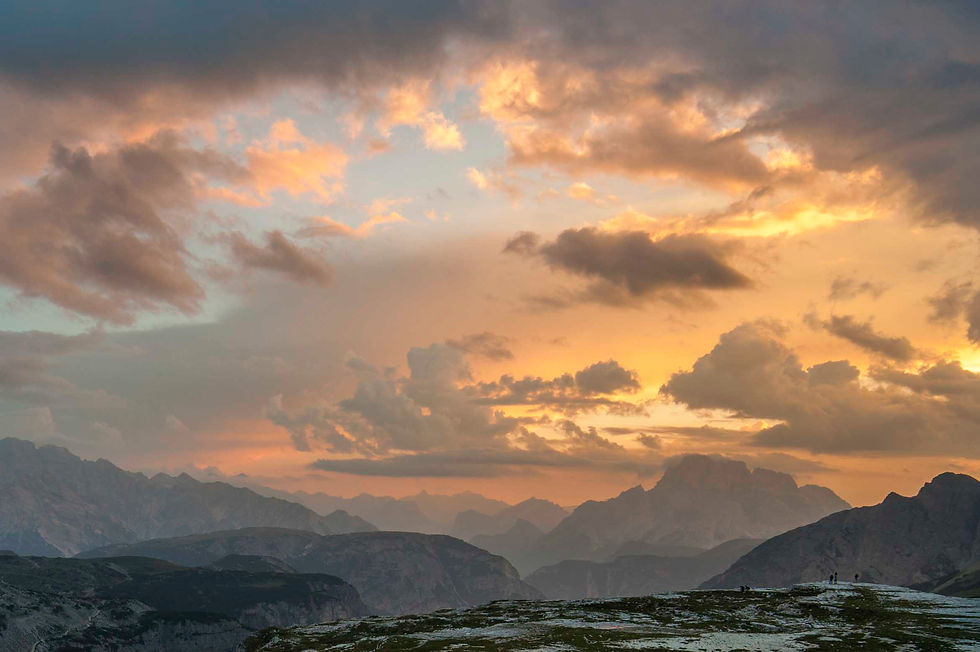
Underneath is a picture from my early years to show you what I mean. The sky and location was stunning, but there was no plan behind it. No though process. No intention. I wasn`t reading the landscape, I was simply reacting to it. You can easily say I was in complete headless chicken mode.
Embrace Simplicity
On of my favourite conditions to shoot in is fog. Not always, but very often, fog has the effect that it simplifies the compositions. It can be frustrating when fog doesn`t lift from a mountain top, but with some patience, you might get lucky and shoot something you didn`t expect. Often, the photograph isn't about the tree or the rock or the mountain you wanted to shoot. It's about how those elements relate to one another and the conditions when you are on location.

Ask yourself one question
Whenever I arrive somewhere new, I try to ask myself one simple question:
Why did I stop?
Sometimes it's because I've reached a location I've wanted to photograph for years. There's nothing wrong with that. Some places become famous for good reason.
But the photographs that mean the most to me usually begin somewhere else.
Maybe it's a line. A texture. A patch of light.
Or simply the feeling that something in the landscape is quietly working together.
If I can answer that question honestly, I'm usually much closer to making a photograph that feels personal.
There is no rush
Landscape photography has taught me that waiting is rarely wasted time. The light changes, wind settles or fog drifts in. Sometimes nothing happens at all. And that's perfectly fine. Not every visit has to produce a great photograph. The time spent looking is never lost.
In fact, I suspect that becoming a better photographer has less to do with taking more pictures and more to do with becoming better at recognising the ones worth taking.
Learning to see is not something you master once. It's something you practise every time you step into the landscape.
And perhaps that's one of the reasons I keep going out.

One thing to take with you
The next time you arrive somewhere with your camera, leave it in your bag for five minutes. Walk. Look. Ask yourself why you stopped before you ask which lens to use.


Comments